
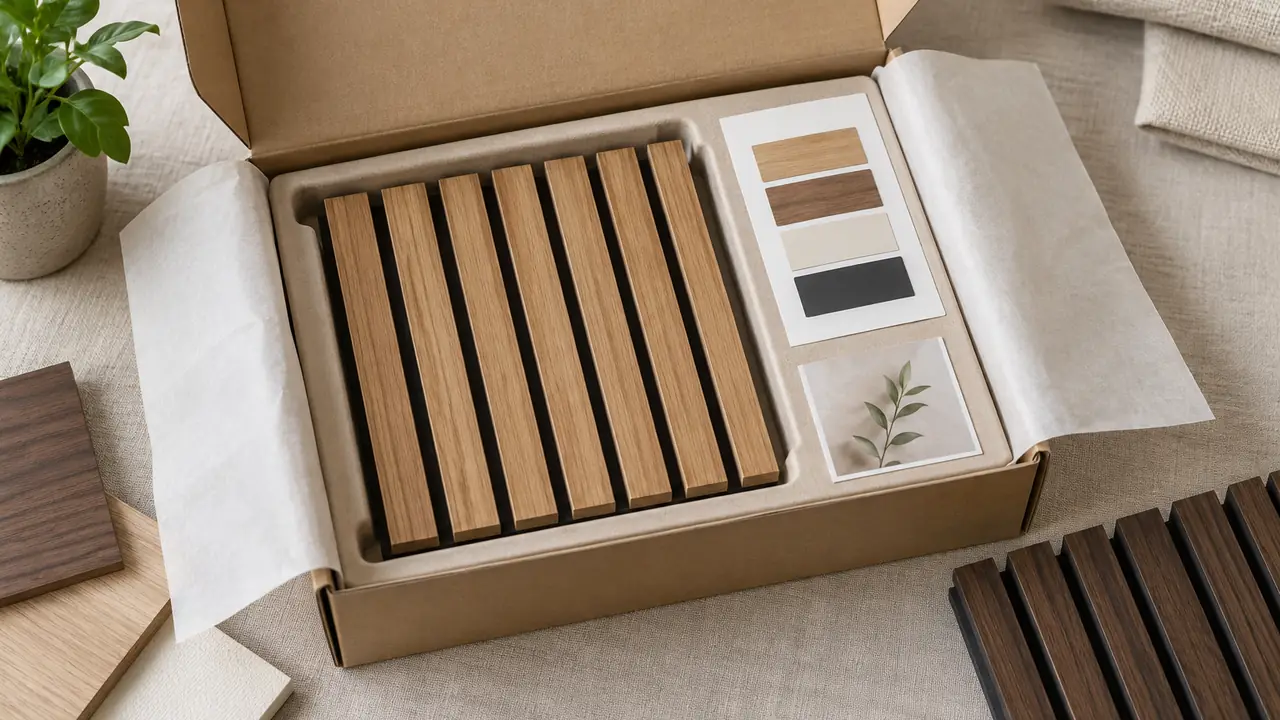
The sample kit is the sales engine
A shopper who cannot touch oak laminate through a screen will happily pay for a swatch that arrives in three days, and the conversion numbers downstream of a sample are the reason DTC panel brands exist. The kit is therefore a product, not an afterthought: a color card with real veneer chips for the flat lines, a short offcut of profile for fluted faces, and a card that explains what a full panel costs in coverage terms. The desk builds kits from the same production stock the full panels come from, so the sample tells the truth about the batch. The economics are written up in the sample programs note, and the samples buyer guide covers formats from single chips to bound swatch books.
Kits refresh with the ladder. When a seasonal color retires, its chip leaves the card, and the card carries a print date so support can answer the only question that matters: does this sample match the batch shipping today.
Small color runs without breaking the ladder
DTC demand is shallow per color and wide across the range, which collides with production reality: every color is a separate run. The reference ranges make small runs workable - fluted and veneered lines typically start at 100-300 m2 per color and mosaic near 100-200 m2 - but the deeper trick is sequencing. A launch ladder of three colors can share one production window; a fourth color added mid-season waits for the next window or pays for its own setup. The desk plans windows per program so the range grows in steps the cash flow can carry. The one line vs multi-line comparison frames the launch decision, and per-color quantities are set out on the MOQ and lead time page.
| Program element | Typical choice | Why it matters online |
|---|---|---|
| Launch ladder | Two to three colors, one production window | One freight cycle, one photography session, one spec table |
| Sample format | Veneer chip card plus profile offcut | Shows color and geometry; fits a letterbox |
| Parcel carton | Drop-tested box, corner protection, panel sleeved | Damaged panels become refunds and reviews |
| Listing spec | Per color, from the program sheet | Grade and size claims match the certificate file |
| Spare parts | Finish touches and offcuts per order | Small damage fixed on site, not returned |
Packaging that survives the parcel network
A fluted panel is light for its size and unforgiving at its corners; a mosaic tile sheet is rigid but the face chips. Parcel networks stack, drop and vibrate, so the carton spec is engineered, not chosen from a catalogue: internal corner protection, a sleeve or wrap on the face, void fill that stops migration, and a drop test against the agreed standard before the first shipment. Retail-grade branding - logo, color name, install QR card - turns the same box into part of the brand experience. The packaging page shows the component options and what is confirmed on the pack sheet.
Cutting returns before they happen
Most panel returns are not defects; they are expectation gaps. Color warmer than the photo, panel smaller than assumed, felt backing mistaken for damage - each is preventable with content: photography shot from the production sample, a dimension diagram with a door for scale, a plain-language spec table, and an install guide that states the wall preparation honestly. The returns reduction note walks the checklist, and the desk supplies the per-color spec lines from the program sheet so listings never drift from the certificates. Where damage does occur in transit, the claim path runs through the packaging record, which is why the drop test file is kept with the program.
Listing content the desk supplies
Every program sheet carries the fields a listing needs: panel size and thickness, slat pitch where relevant, core and backing description, emission grade with the certificate reference, fire class only where a test report exists, coverage per box and the packaging count. The discipline is that these fields come from one place. When marketing paraphrases, claims drift; when the sheet is copied, the listing matches the lot. The listing content note gives the field-by-field format.
A launch sequence that holds
- Brief: colors, formats, market, monthly volume estimate.
- Line recommendation with reference ranges; plants shortlisted per line.
- Samples and kit stock produced from the same runs as first batch stock.
- Carton spec approved with a drop test; pack sheet confirmed in writing.
- First window ships; reviews and support tickets feed the next ladder decision.
For timing, samples run 5-15 working days by format and a first batch 25-45 days, or 45-60 for a custom color; the figures are confirmed per program before any deposit. The quote form asks the questions a plant will ask, which is the fastest way to a window that fits a launch calendar.