
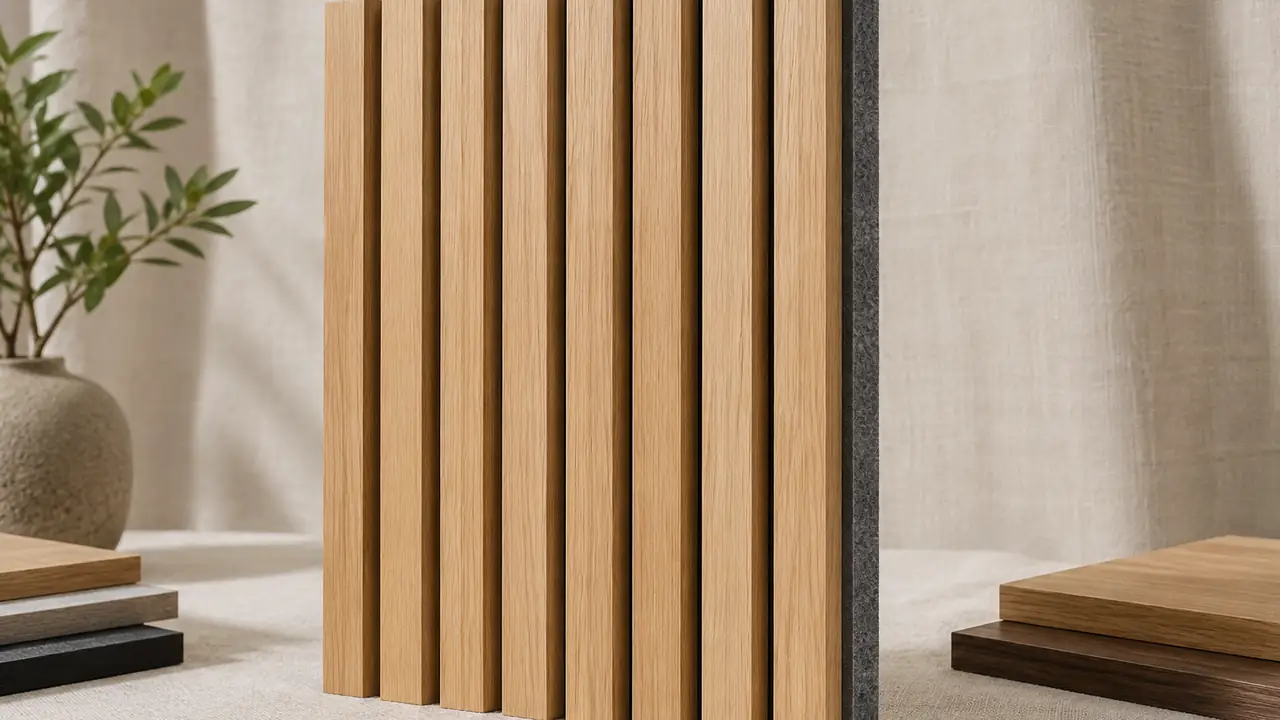
What a fluted wall panel is
A fluted wall panel is a ready-to-mount section of vertical slats. Thin MDF strips are veneered, shaped and spaced over a PET acoustic felt backing, so one panel covers a strip of wall with a finished rhythm of shadow and light. Sizes cluster around 2400-2900 mm long by 120-160 mm high, with finished thickness between 12 and 22 mm depending on slat depth. The felt does three jobs at once: it is the rear surface that meets the wall, it adds acoustic absorption behind the slats, and it takes the screws or clips during installation.
The category took off with the accent-wall boom, and Semrush demand data shows why importers care: wood panel wall searches run at roughly 8,100 a month in the United States, with fluted and slat variants among the fastest-growing modifiers. The trade-off buyers learn: two fluted panels with the same oak color name can differ in slat pitch, veneer thickness and glue class, and the difference shows up on the wall.
The six layers on the card
The swatch sketch shows the fluted face and the pattern legend; the card lists the layers in the order a plant quotes them.
| Layer | What decides quality | Typical options |
|---|---|---|
| 1 Face layer | Veneer species, slicing, color match across slats | Oak, walnut, ash; natural or engineered veneer |
| 2 Core or body | MDF density, moisture class, slat profile | Moisture-resistant MDF; 12-30 mm slat width |
| 3 Backing layer | Felt density and thickness | PET felt 9-12 mm, grey or black, recycled content per plant |
| 4 Edges and trims | Edge banding adhesion and color match | Matching veneer banding; end caps on request |
| 5 Fixings and system | Install speed and reuse | Battens and screws, or mounting rails with clips |
| 6 Packaging | Transit protection per panel | Corner-protected cartons, color card per box |
Sizes, thicknesses and lead times are typical ranges seen across the category, not a datasheet. Each program carries its own specification, and the figures a brand prints are confirmed from that sheet, not from this page. The acoustic guide explains what the felt actually contributes.
Colors, veneers and batch matching
Color is the number one reason fluted programs grow or stall. A natural oak veneer varies sheet to sheet; engineered veneers repeat more predictably and are the usual choice once a range passes three or four colors. The desk keeps a retained swatch per program and checks every lot against it under a standard lamp, because a warm lot next to a cool lot is visible from across a room. The color matching note describes the process; wood veneer panels use the same discipline on flat faces.
Acoustics without overclaiming
With a 9-12 mm PET felt behind slats, fluted panels absorb a useful share of mid-frequency sound; tested configurations of the slat family commonly report NRC values in the 0.75-0.85 band. The honest framing: NRC belongs to the tested configuration, not to the family name, and a listing should quote the report. The acoustic slat panel line is the same structure optimized for it.
Options worth specifying
- Slat pitch. 15-40 mm centre-to-centre; tighter pitches read contemporary, wider pitches read classic.
- Color ladder. Two to six colors is the usual first range; each color is a separate production run.
- Fire report. Where a project needs one, quote the rating from the test report, never as a family promise; see the fire guide.
- Packaging. Corner-protected cartons for retail, crated stacks for projects; see packaging.
- Branding. Logo on box and color card; branded felt printing on larger programs; see OEM and private label.
Where the panels are made
Fluted and slat panels come mostly from the Linyi belt in Shandong, where WPC, bamboo-fiber and veneer panel plants sit close to their board and felt suppliers, with Shouguang and Jiashan adding veneer and melamine depth and Foshan serving the high-end project market. The desk shortlists plants by press lines, glue class and the certificate file they can produce rather than by catalogue size. More on the clusters.
Inspection before shipment
- Panel size and thickness on sampled units against the program sheet.
- Slat pitch and straightness; veneer adhesion at slat edges.
- Color against the retained swatch under a standard lamp.
- Moisture content against the destination climate band.
- Emission class documents and felt specification against the certificate file.
- Carton drop test and label, color card and pack contents against the approved sheet.
The plan is written per program and confirmed before the first batch; see quality control. For reference quantities and timing, the MOQ and lead time page sets the ranges, and the quote form asks what a plant will ask.