
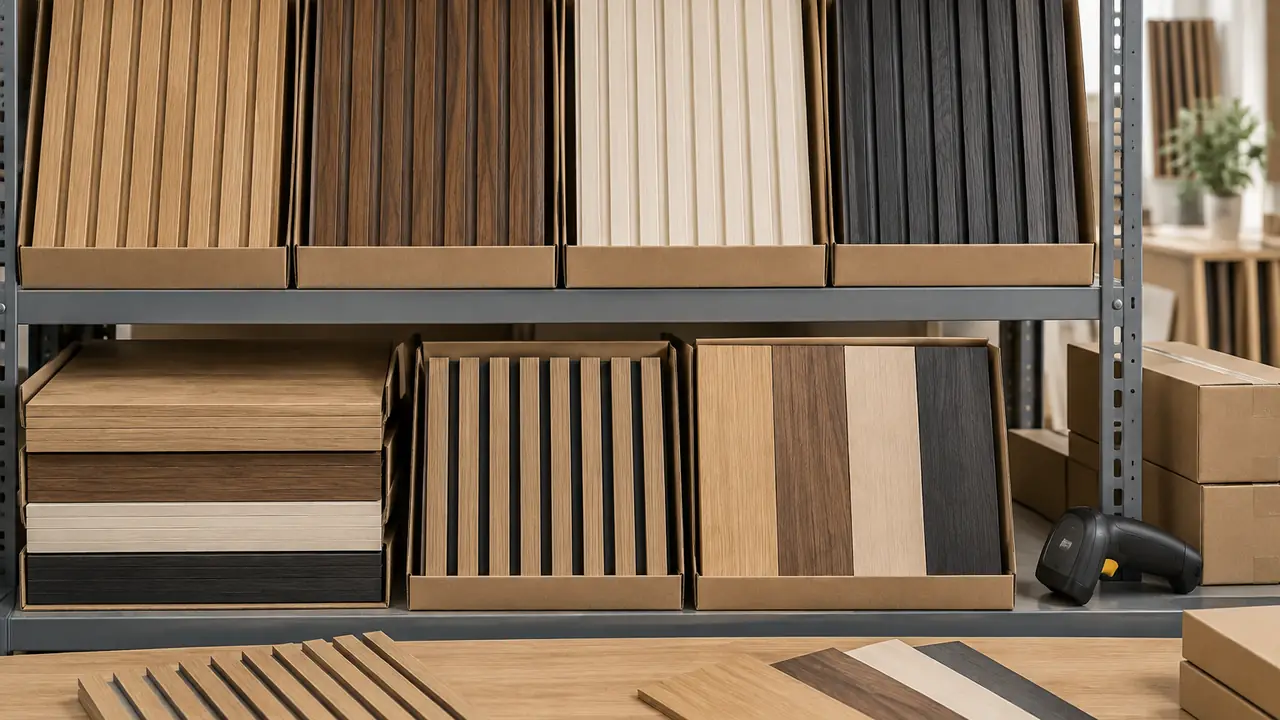
Why samples sell panels
Wood is a tactile category. A buyer can read dimensions, grades and lead times on a screen, but grain depth, surface sheen and felt color are physical properties, and no photograph settles them. In panel categories the sample is where interest becomes intent: a swatch pinned to a moodboard is a product entering a project, and a sample set opened on a counter is a range entering a sales script. The desk treats the sample program as a sales asset planned with the same care as the range itself, because in practice samples lead orders by about a season - the colors being sampled this quarter are the colors being reordered next. That single observation reshapes the budget conversation: a sample program is not packaging overhead, it is the front half of the demand forecast, and it deserves a slot in the planning calendar next to production itself.
The four sample formats
| Format | What it proves | Typical preparation | Best use |
|---|---|---|---|
| Color card | The tone family at a glance | About 5-10 working days | First contact and range presentation |
| Full panel sample | Scale, edge, weight, backing | About 7-15 working days | Serious projects, installers, photography |
| Custom color chip | A developed tone, not a catalog tone | About 15-25 days of lab work | Signature colors before commitment |
| Component kit | Trims, felt, rail, fixings | Assembled alongside the card | Programs selling systems, not just panels |
The component kit is the format importers forget. If the range sells as a wall - panels with mounting rails, edge trims and felt backing - then a sample of the panel alone answers half the question. A kit assembled from the components category lets an installer feel the click of a rail and see how a trim meets the panel, which is what closes system sales. Programs that sample the whole system report fewer surprised questions at install time, which is another way of saying fewer after-sales tickets.
Designing the program
Three decisions shape the program. What goes in: core colors always, current seasonal accents, and one component piece if the range sells as a system. What it references: every sample carries its color code and lot reference so a later order lands on the same swatch rather than near it - the retained-swatch discipline from color planning applies to samples first of all. How it is versioned: date every card and retire it with the color ladder, because a stale card selling a retired color manufactures disappointment at the worst moment, the reorder. The sample buyer guide walks the formats with plant-side detail, including what a card should disclose about finish and grade.
Matching the set to the channel
The same range samples differently by channel. A DTC storefront needs a mailer-friendly card: light, rigid, self-explanatory, with codes a customer can quote in a chat window. A retail chain buyer needs a counter set that survives handling by many hands and a full panel sample for the planogram review, because shelf programs are approved on the physical object. A project or hospitality channel needs the component kit plus grade documents - the sample travels with its certificates' names and lot references, since the spec writer will attach them to a submittal. A sourcing agent handling mixed programs usually wants all three, sequenced. None of this changes the colors; it changes the container, the paperwork and the follow-up. The desk assembles per-channel sets as standard practice, and the cost difference between a card and a kit is small next to the cost of a channel that sampled the wrong thing. When a program spans several channels, the register keeps them apart: which set went where, when, and what each recipient asked next.
Logistics and follow-up
Samples travel by express, typically 5-8 days door to door, and the packaging is part of the impression: a chipped corner argues against the very finish it represents. Corner protection and a rigid mailer are program equipment, the same discipline as export crating described on the packaging page. Follow-up is where the engine actually turns. A sample that arrives without a note, a lead window and a next step is a brochure; a sample that arrives with the reference ranges for its line - typical minimums and lead times from the MOQ and lead time page - lets the buyer move from touch to schedule in one conversation. The desk pairs every sample shipment with those ranges in writing, so the follow-up has content rather than a nudge.
Measuring the engine
Track three numbers, all from your own channel: request rate by color, conversion from sample to quote, and the lag between sampling and order. No industry percentage is worth copying, because sampling economics differ between channels - a showroom network and a DTC storefront sample differently - but your own numbers tracked across two seasons will say which accents earn promotion toward core status and which should retire on schedule. The desk reports these figures back per program in writing, alongside the sample register, so the color ladder review happens on evidence. The measurement costs almost nothing; skipping it costs a season of guessing.
Paying for samples
Policies vary and belong to the seller. Common structures include free color cards with charged full panels, charged sets credited against a first order, and deposit models for custom color work where the lab time is real and sunk regardless of the outcome. The desk organizes whichever structure the client chooses and confirms it in writing before anything ships; a program can be started through the quote form with the sampling plan attached. What matters commercially is that the policy is legible before the sample leaves - surprise charges end more sample conversations than sample quality ever has. Whatever the structure, put it on the card insert as well as the invoice, so the policy travels with the sample.