
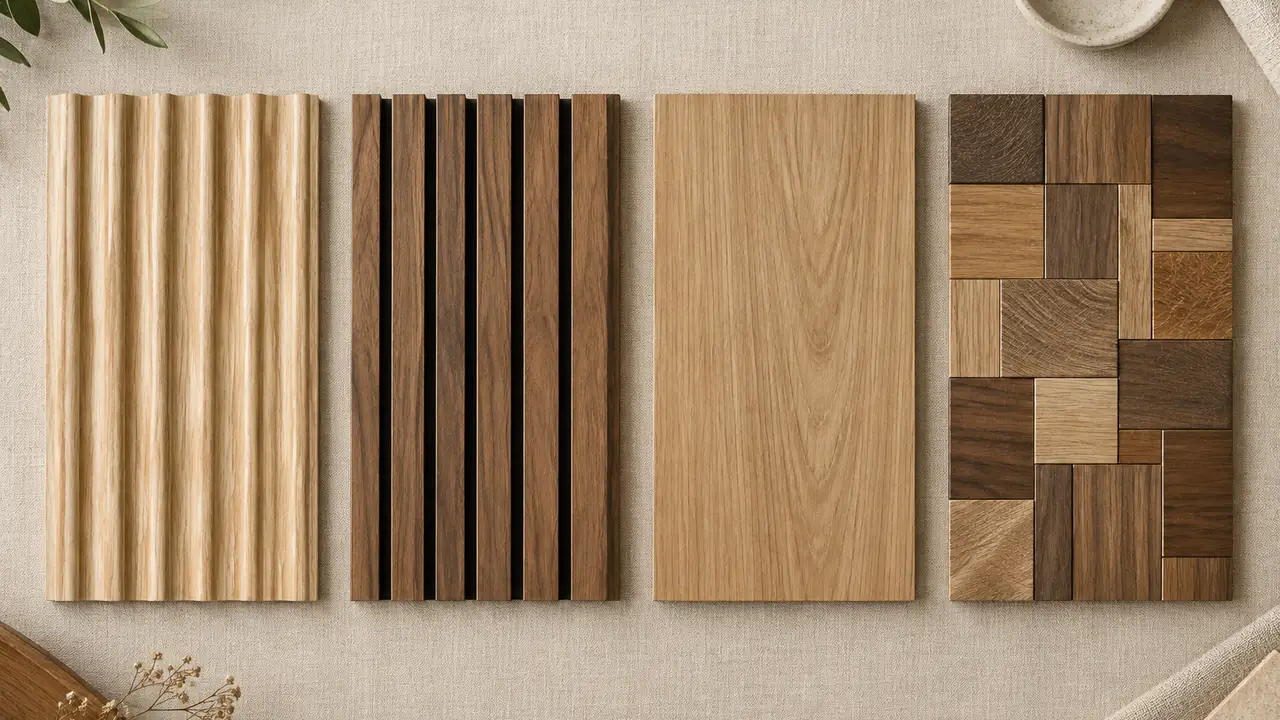
Why samples are the program, not a courtesy
Every panel family in this catalogue sells on a surface: the tone of an oak, the depth of a walnut, the way a fluted shadow falls. A photograph carries none of that reliably - screens shift color, prints shift more. The sample is the only artifact that moves the actual surface into the customer's hands, which makes the sample program the highest-leverage document a panel brand owns. It is also where sourcing discipline is created: the color approved on a sample becomes the retained swatch every production lot is checked against, so the program that starts as a sales tool ends as the quality system.
This desk treats sample planning as part of the order, not a prelude to it. The color ladder is chosen, sampled, approved and frozen before bulk is discussed; the timeline below is planned backwards from the in-warehouse date; and every approval is kept in two places - with the brand and with the plant - so a repeat order two years later has something to be checked against. The sample program business note covers the commercial side; this page covers the operational one.
The sample ladder and its timing
Sampling runs in stages, and each stage answers a different question. Typical timings across the category, confirmed in writing per program: color card books in roughly 5-10 working days, full panel samples in roughly 7-15 working days, custom color proofing in roughly 15-25 days - and samples by courier in roughly 5-8 days once they exist.
| Sample stage | Typical timing | The question it answers |
|---|---|---|
| Color card book | Roughly 5-10 working days | Which tones enter the shortlist at all |
| Full panel sample | Roughly 7-15 working days | How the finish reads at scale: edge, feel, shadow, gloss |
| Custom color proof | Roughly 15-25 days | Whether the custom tone matches intent - and becomes the frozen standard |
| Dealer or marketplace kit | Assembled after approval | What the market sees before the first lot lands |
| Retained swatch | Created at approval | What every future lot is checked against |
The ladder has a logic a buyer should respect rather than compress. A color card is cheap and fast but small; a panel sample is honest about scale but costs more per unit; a custom proof is a production trial, not a print job. Skipping stages does not save the time - it moves the discovery of a mistake to a container that has already shipped, where the damage note is cold comfort for a color that was wrong from the start.
What a good color card contains
A color card that earns its place in a dealer meeting carries five things. First, the actual surfaces, not prints: real veneer or real profile chips, because the whole point is material honesty. Second, the full color ladder of the line, in the order the range will present it - core tones first, seasonal tones after - so the card teaches the range, not just the colors. Third, the reference numbers each tone will carry through the program: the same code that appears on quotations, packing lists and lot certificates. Fourth, the basics a buyer needs beside the chip - formats, thicknesses per spec sheet, the fixing system - without turning the card into a catalogue. Fifth, a production date or batch reference, because a card from three years ago is a liability: finishes drift, standards improve, and an outdated card quietly mis-sells the range.
The products page shows how the lines present their swatch cards and reference ranges, and the same numbers should be traceable from card to lot, because traceability is what turns a nice sample into an enforceable standard.
The retained swatch: the contract behind consistency
When a tone is approved, the sample that was approved should not walk away with the brand and vanish. It is duplicated: one half stays with the plant as the retained swatch, one half travels with the brand, and every production lot is checked against the retained standard under a standard lamp before shipment. That single procedure is the difference between a range and a sequence of surprises. It is what makes a year-three repeat order match a launch order, what makes a phase-two hotel floor match phase one, and what makes a dispute about tone resolvable in minutes rather than in acrimony.
The batch matching note and the spec-reading note show how the procedure is written into a program. Two habits complete it: approve the swatch under the light the finished wall will actually live in, not just under daylight; and record the approval in writing - tone code, date, both swatch locations - so the standard survives staff changes on both sides. Natural veneers will always drift a little; the retained swatch defines how much drift the program has agreed to call acceptable, and that agreement, made once, is what the MOQ and lead time page means by confirmed in writing for each program.
Dealer and marketplace sample kits
A brand that sells through dealers, retail chains or marketplace listings needs samples that survive a different journey: dozens of hands, warehouse shelves, courier networks. The kits that work share three traits. They are compact - a swatch book of chips and a few short panel offcuts travel better than full panels, and the full-panel experience is reserved for the showroom or a paid sample request. They are labeled for self-service: tone codes, line names and a pointer to the listing or the sales contact on every component, because a dealer who cannot identify a chip will not sell it. And they are versioned like the color card: dated, replaced when the ladder changes, and recalled when a tone is retired, because an orphaned swatch in the field sells a color the program no longer makes.
Marketplace sellers add one requirement: the sample must match the listing photograph well enough that a buyer who orders both sees one product. The listing content note covers photographing panels honestly, and the most reliable returns reduction available to an e-commerce panel program is a sample request button next to the add-to-cart. For packaging of the kits themselves - boxes, inserts, printed cards - the retail packaging page shows the options, and custom kits are a standard part of the private label program.
What to ask a partner plant
- What the standard sample lead times are per stage - color card, panel sample, custom proof - and what slows them down.
- Whether samples are cut from current production or made as one-offs, because only production samples predict the lot.
- How the retained swatch is stored, labeled and checked, and under what lighting lots are compared.
- Whether a custom color, once approved, is written into the plant system as a standard with its formula record.
- What the courier arrangement is - typical 5-8 days - and who tracks the shipment.
- Whether dealer kits can be assembled, labeled and versioned to the brand's ladder, and at what cadence they are refreshed.
- What the written confirmation covers: stages, dates, swatch custody, and who holds which half of each approval.
How the desk runs sample programs
A sample program through this desk is planned as a small production run with a deadline. The brief fixes the color ladder and the audience - dealers, marketplace, project buyers. The desk shortlists partner plants per line, orders the ladder of samples - cards, then panels, then custom proofs where the range needs them - and checks each approval into the two-custody swatch system before anything is discussed at volume. Timing is planned backwards from the launch or in-warehouse date with the stages above, courier legs included, so sampling never becomes the reason a container misses a season. When the ladder is drafted, the quote form starts the process: it takes the line, the tones and the destination market in one message, and the desk returns plant options with sample timelines attached.