
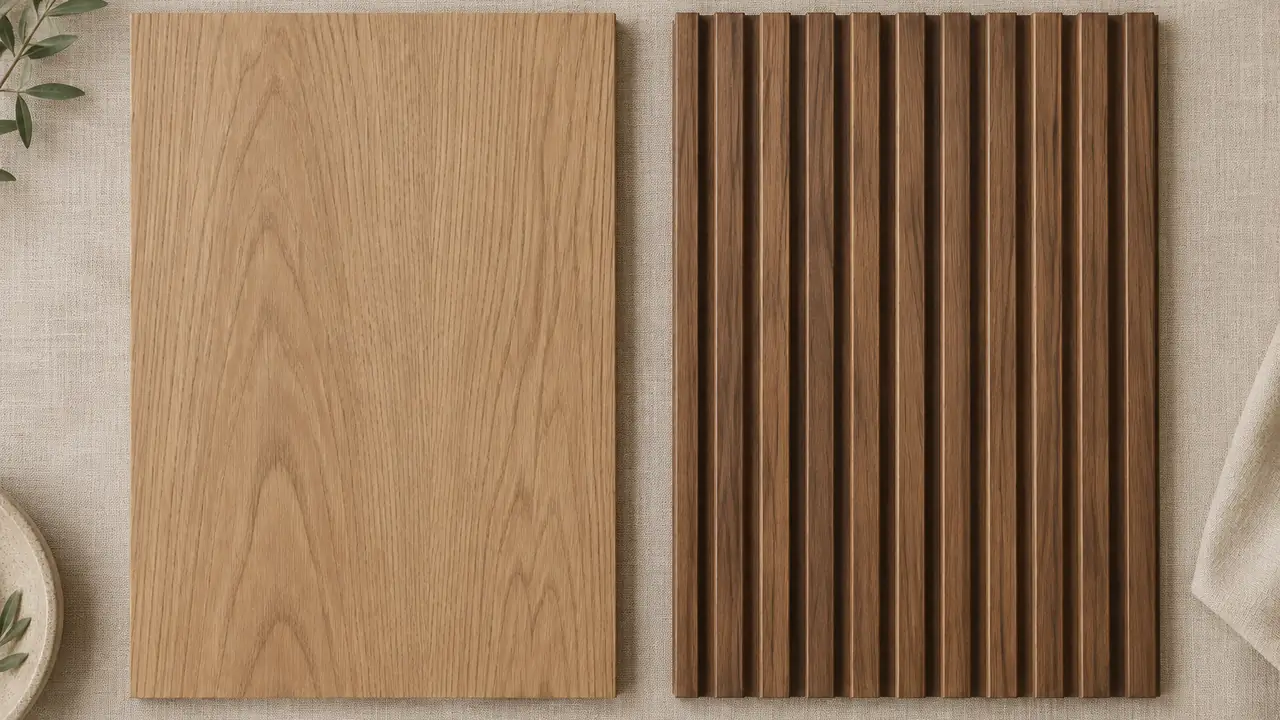
Two ways to own a color
A color on a wall panel is not a choice; it is an asset with a supply chain. Someone mixed it, proved it, froze it as a standard, and organized production so the twentieth container matches the first. That work exists behind every catalog tone, and it is the work a custom program commissions for itself. Buyers comparing the two routes are really asking three questions: how fast the first container must land, how much the color itself is worth to the brand, and who will keep the standard honest across years of repeat orders. The routes cost differently in each currency, which is why the honest comparison is a planning exercise, not a price check.
This note describes what each route actually buys, compares them for a launch decision, and closes with the shared discipline - the retained swatch and the batch plan - that either route lives or dies by.
What the catalog route buys
A catalog color arrives with its history attached: a proven formula, an existing retained swatch at the plant, and line crews who have run it before. That history converts directly into speed - production for veneered and profile lines typically runs 25-45 days because nothing needs proving first - and into confidence, because the plant's competence with that tone is documented in past lots rather than promised for future ones. Color cards ship in 5-10 working days and panel samples in 7-15, so a buyer can assemble and stress-test a range in weeks. The trade is shared ownership: competitors can specify the same oak, and the identity of the wall rests on everything wrapped around the color - the line mix, the packaging, the brand - rather than on the tone itself. For first programs, marketplace ranges and refits on a deadline, that trade is usually the right one to make.
What the custom route buys
A custom color buys exclusivity of tone and a ladder that belongs to the brand. The process is disciplined rather than mysterious: a target is matched at the plant, proofed as a sample, approved, and frozen as the retained swatch that every lot is checked against under a standard lamp. Sampling commonly runs 15-25 days, and the first production order typically takes longer than a catalog run - 45-60 days is the category's usual band for first custom-color programs - because the proofing cycle sits ahead of the press schedule. In exchange, the brand's walls cannot be copied from a competitor's order form, and the color ladder can be designed as an asset: core tones that carry the range plus seasonal extensions that refresh it. Custom work also extends beyond color into pitch, format and packaging, which is where OEM programs become identity programs; the OEM and private label page maps that wider scope.
The two routes side by side
| Aspect | Catalog colors | Custom colors |
|---|---|---|
| Time to first container | Bulk run 25-45 days | Sampling 15-25 days, first order 45-60 days |
| Identity | Shared ladder, brand carried by packaging | Tone owned by the program |
| Plant competence | Proven on past lots | Built through the proofing cycle |
| Sampling speed | Color card 5-10 days, samples 7-15 days | Proof cycle 15-25 days |
| Batch risk | Managed by existing swatch | Managed by the new retained swatch |
| Reference minimum | 100-300 sq m per color | Per program and color, confirmed in writing |
| Strongest fit | First launches, refits, deadline programs | Established brands, signature interiors |
The table frames a sequencing decision more than a ranking: many programs start catalog to reach the market, then migrate hero tones to custom once demand proves which colors deserve ownership.
The discipline both routes share
Whichever route a program takes, the color survives on one mechanism: a retained swatch frozen at approval, lots checked against it under a standard lamp, and a batch-matching plan that says what happens when production crosses a press cycle. The batch matching note explains the mechanism; what matters here is that custom does not exempt a program from it and catalog does not deliver it automatically. The failure mode is identical in both directions - a second order that almost matches, discovered on a wall where the first lot is already installed - and the prevention is identical too: name the standard, keep it, and require every lot to answer to it. Documents follow the same logic. Custom or catalog, the emission grade and any fire class belong to the build and travel per lot; the grades guide covers the tiers the certificates name.
Planning the ladder, not just the color
A catalog is also a map of competence rather than a uniform menu. Plants hold different ladders - one is deep in oak tones, another in dark walnut stains, a third in painted pastels - and the same catalog number from two plants can drift like two vintages of one wine. This is why the desk shortlists partner plants per color family rather than per category: a program built on pale engineered oak wants the plant whose pale oak lots have passed inspection for years. Asking which tones a plant runs weekly is a fair question at quotation, and the answer tells a buyer more about batch risk than any certificate can.
The mature version of this decision is not catalog versus custom but a ladder that uses both deliberately. Core tones - the two or three surfaces that carry most volume - are candidates for custom ownership once repeat orders justify it; accent tones and seasonal extensions are candidates for catalog speed, refreshed without proofing cycles. The color planning note shows how ranges are architected around cores and seasonals, and the wood veneer panel line illustrates how one species stretches across a ladder through stain and tone work. Sequencing matters more than ambition: a brand that customizes everything spends its first year proving formulas, while a brand that customizes nothing spends it looking like everyone else's shelf. And the ladder should be one system end to end - trims, edge banding and end caps finished to the same tones, so a feature wall reads as one decision rather than an assembly of near-matches.
Reference quantities and windows for either route are listed on the MOQ and lead time page, always confirmed in writing per program. When the ladder is planned, the quote form carries it - core tones, accents, custom candidates and certificates - to two or three partner plants as one brief, so the first quotation already reflects the range rather than a single color.