
The distribution problem is color, not product
A distributor rarely loses money because a panel was badly made; the losses come from a color that changes between batches, a ladder that gaps in the middle, and a container that arrives full of the wrong depth. Buyers in the trade notice in one install: the walnut ordered as a repeat comes in visibly warmer, and the stock behind it no longer matches the stock on the wall. Everything a distribution program needs follows from solving color first - which lines to ladder, how deep to stock each rung, and what the repeat lane promises.
The desk approaches a distributor the way it approaches a brand: one program sheet per ladder, a retained swatch per color, and lot checks before shipment. The difference is breadth. Where a brand defends one ladder, a distributor runs several - one per line, one per customer type - and the container math underneath decides whether the program is profitable.
Building the color ladder per line
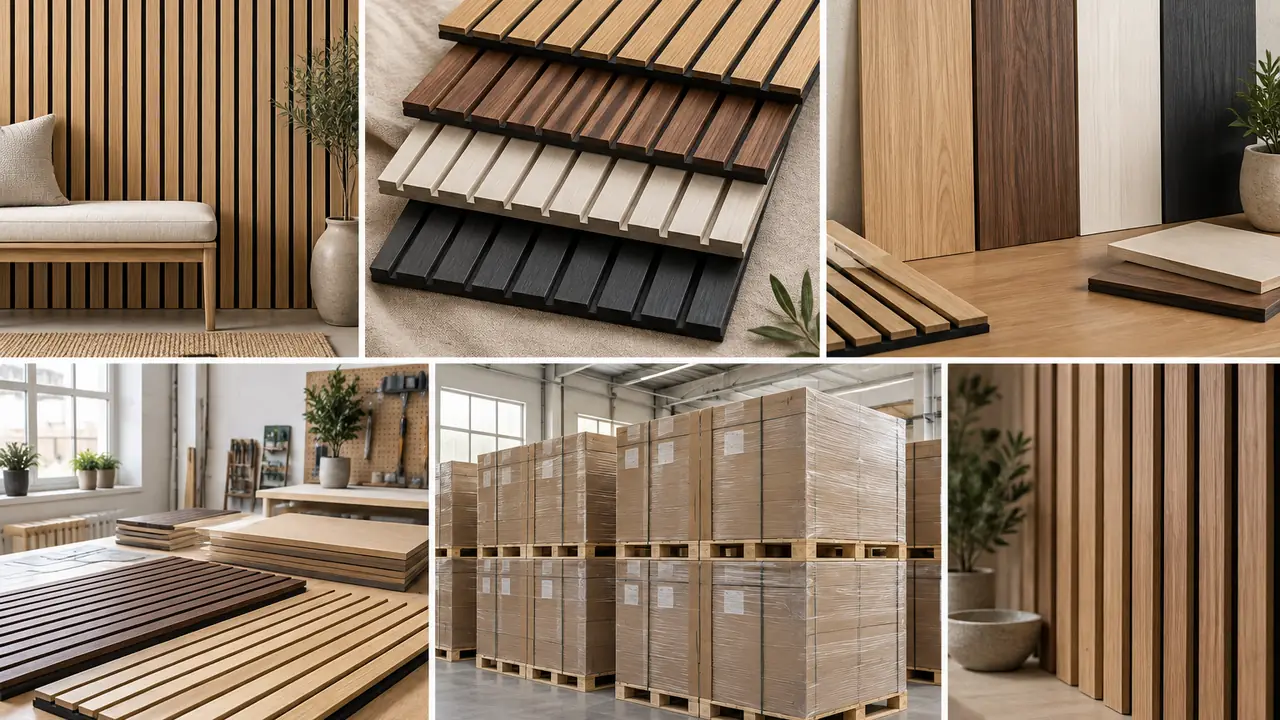
A workable ladder has structure, not just colors. Typically: one or two anchors that never retire and carry most of the volume, two to four core supports that cover the taste range, and at most one or two seasonal accents with a defined end date. On the wood veneer line, engineered veneers hold ladders better than natural sheets because they repeat; on the fluted line, the same logic applies to stained and engineered faces over natural oak. The WPC line ladders by profile and tone and behaves differently again - color is extruded in, so a ladder rung is a production recipe rather than a surface decision. The color planning note walks the anchor-support-accent split in detail.
| Ladder tier | Typical depth | What the desk confirms in writing |
|---|---|---|
| Anchors | Highest; most of the reorder volume | Retained swatch, repeat MOQ at the low end, priority production windows |
| Core supports | Medium; covers the taste range | Batch continuity clause and lamp check per lot against the standard |
| Seasonal accents | Shallow; sell-through window | Defined run quantity and end date; no silent migration into the core ladder |
Stock depth and the repeat lane
Depth per color is a trade between container efficiency and dead stock. The reference ranges give the floor - 100-300 m2 per color on veneered lines, 300-500 m2 on WPC - and repeat colors often run at the lower end once the lane is established. The practical rule distributors land on: anchors at depth that survives a season, supports at depth that survives a quarter, accents at run quantity. What makes depth safe is the repeat lane: the same plant, the same recipe, the same retained swatch, and a lot check under a standard lamp before every shipment. The seasonality note covers how windows shift through the year and where depth is worth its carrying cost.
Mixed containers that still make sense
Distribution loads are mixed by design: ladder colors across two or three lines in one 40'HC, which as a reference carries roughly 800-1,200 m2 depending on thickness and packaging. The discipline is in the plan, not the volume - which colors at what depth, which line's cartons stack where, and what the buffer is if one color's batch slips a week. The desk plans the mix line by line with the plants' stack calculations, then confirms it on the program sheet so the second container repeats the first. The container planning note shows worked mixes, and the logistics page covers documents and transit times per route.
Dealer-facing documents
A wholesale program lives or dies at the counter, so the document set is built for dealers: card decks with real veneer chips per ladder, one-page spec sheets per SKU, and the grade papers - emission certificates per lot, fire classes quoted per test report where models hold them - available to pass on to project-minded customers. The retained swatch file does double duty here: it arbitrates the plant-side color question and it gives the distributor a defensible answer when a dealer asks why this lot looks different from last year's. Nothing in the set is invented by the desk; documents come from the partner plants and are verified per project.
The rhythm of a wholesale program
- Ladder design per line: anchors, supports, accents; depth targets per tier.
- Plants shortlisted per line; retained swatches produced and signed.
- First mixed container planned and confirmed on the program sheet.
- Repeat lanes open per color; every lot lamp-checked against the standard.
- Ladder reviewed per season; accents retire on schedule, anchors persist.
Reference quantities and timing for every line sit on the MOQ and lead time page; the program sheet turns them into figures per color, confirmed in writing before the first container books.