
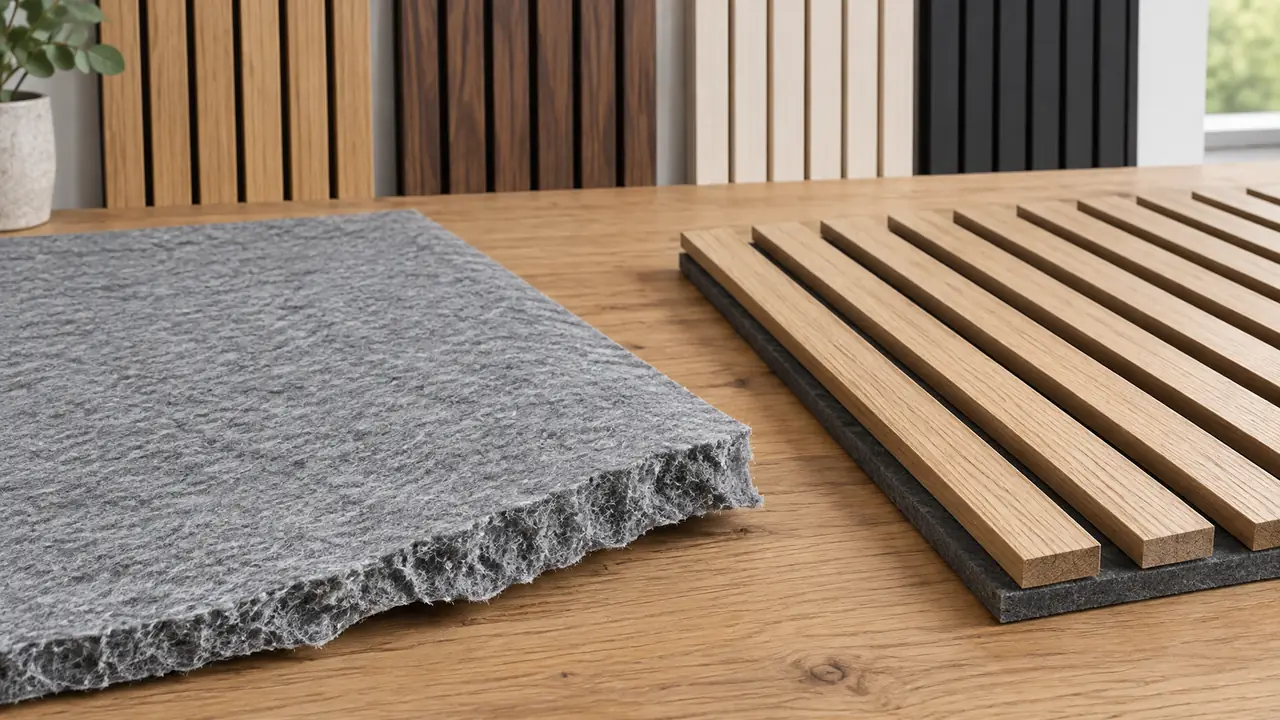
What the backing does
Recycled PET felt is the rear layer of most fluted and acoustic slat panels: a pressed polyester sheet, typically 9-12 mm thick, grey or black, bonded behind the slat field. It does three jobs at once. It is the finished rear surface a fitter sees when a panel goes up. It is the fixing line - screws and clips land in the felt, which is why panel installation stays concealed. And it contributes absorption behind the slats, which is why an acoustic slat panel sounds different from a bare board of the same shape. Because all three roles depend on the felt quality, plants treat it as a specified component, not a filler; the components hub sets that context.
Thickness and density
The category works in a 9-12 mm band. Thicker felt adds body, a deeper screw line and more absorption potential, at the price of panel weight and cost; thinner felt keeps weight down on ceilings and shallow profiles. Density is the quieter variable: it affects screw hold, edge crispness where slats are cut close, and how the panel feels in the hand. Density is set per program and confirmed on the sheet, so a re-order compares like with like. Color follows the wall logic: black disappears behind dark slats and in shadow gaps, grey suits light oak and ash ranges where reveals catch the eye. The acoustic slat panel line and the fluted wall panel line both build on this felt with different slat depths.
Recycled content, declared not claimed
PET felt is commonly made from recovered bottles, and the recycled story sells. The discipline that keeps it honest: recycled content is stated per plant declaration with supporting documents, checked per lot, and written as a documented figure rather than a badge. The desk does not paste sustainability claims onto products; the sustainability claims note explains what is provable and what is not. Where a program wants felt compared against the alternatives, the PET felt vs mineral wool comparison covers handling, weight and acoustics.
NRC contribution, per report
Felt behind slats absorbs a useful share of mid-frequency sound, which is why tested slat configurations commonly report NRC values in the 0.75-0.85 band. The honest framing stands: NRC belongs to the tested configuration - slat width, pitch, felt thickness, mounting - not to the felt alone or the family name. A program that plans to quote a figure orders the test on its own configuration and cites the report. The acoustic NRC guide explains the method, and the NRC explained post covers the wording listings can defend.
Felt options at a glance
| Option | Typical range | What it changes |
|---|---|---|
| Thickness | 9-12 mm | Body, absorption potential, weight |
| Color | Grey or black | Rear appearance in gaps and reveals |
| Density | Set per program | Screw hold, edge quality, handling feel |
| Face print | Plain or brand logo | Branding on larger programs |
| Format | Sheets cut to panel size | Line waste and handling on the press |
Who buys felt separately
Panel plants top up felt mid-season when a range color outruns its bonding line. Regional workshops buy sheet stock to press their own slat faces on non-standard sizes. Brands hold felt with their spare panels so a field repair replaces face and backing together. Installers on refurbishment jobs order felt alone where an old field is being rebuilt with new slats. Each of these runs as its own program with an area-based MOQ set per order, quoted alongside the panels it must match where both are bought from the desk.
MOQ, lead time and inspection
MOQ is set per program and quoted by area, confirmed in writing; samples run 7-15 working days and batches 25-45 days, in step with the panel calendar on the MOQ and lead time page. Felt ordered with panels rides the same container and the same inspection window, which is the usual way first programs buy it. Before shipment, sampled sheets are checked for thickness and squareness, color against the retained swatch, density documents against the declaration, face print registration where branded, and pack integrity on the drop test - the routine described under quality control. Sheets ship flat-packed on edge-protected pallets. To spec a felt against a slat program, start with the quote form.