
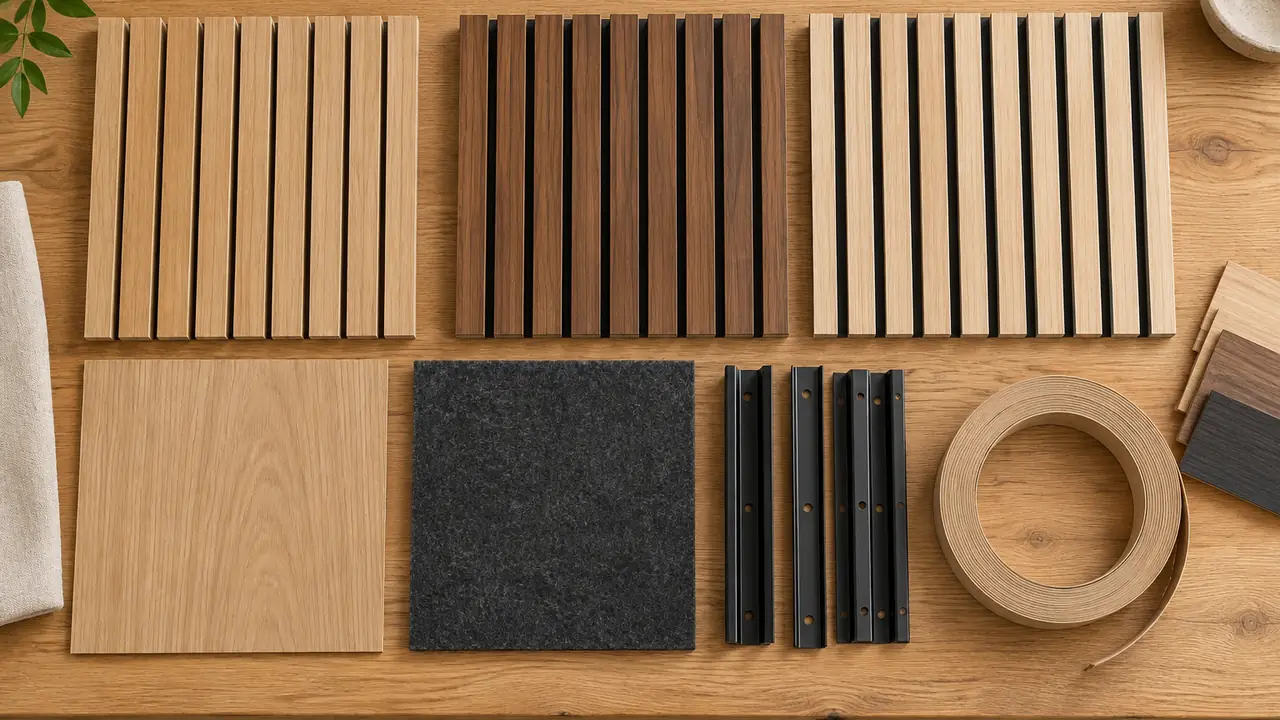
What a veneer sheet actually is
A wood veneer sheet is a leaf of real wood, typically 0.3-0.6 mm thick across the category, bonded to a carrier so it can be handled like a laminate without splitting. Leaves are sliced from a flitch - a half-log mounted for production - and arrive at the overlay plant with one of two carriers: a non-woven fleece or a paper backing. The carrier does three jobs. It holds fragile grain together during handling, it moderates the transfer of glue and moisture into the leaf, and it gives the press a consistent bonding surface. Without it, many species simply cannot survive transport at that thickness.
Two supply formats exist. Rolls suit long runs and edge wrapping; flat sheets suit panel facing and cutting plans. Both are sold by area, and both are planned by flitch, which is the real unit of quality in this trade: leaves sliced from the same log share grain and color, leaves from different logs do not. The veneer sheets line page lists the options partner plants ask about, and the components category shows where sheets sit next to rails, felt and trims.
Natural and engineered leaves
The first specification fork is natural versus engineered. A natural leaf is sliced from a real log; it carries knots, mineral streaks and color drift, and no two leaves are identical. An engineered leaf is made by dyeing, laminating and re-slicing fast-growing wood into a repeatable grain; it is straighter, more uniform, and it repeats in a controlled way across batches. Neither is better - they serve different programs, and many brands run both, natural for hero surfaces and engineered for long runs where batch discipline matters more than romance.
| Attribute | Natural veneer | Engineered veneer |
|---|---|---|
| Source | Sliced from a real log | Recomposed and re-sliced dyed wood |
| Grain and color | Unique leaves, drift between flitches | Uniform, repeats in a controlled pattern |
| Batch planning | Flitch-by-flitch allocation | Run-to-run consistency, simpler reorders |
| Typical thickness | 0.3-0.6 mm on fleece or paper | 0.3-0.6 mm on fleece or paper |
| Suits | Feature walls, reception desks, hero faces | Long runs and multi-container programs |
Backings and formats
The carrier is a small line item with large consequences. Fleece-backed leaves flex more and tolerate more handling, which suits curved work and site wrapping; paper-backed leaves press flatter and sand more predictably, which suits flat panel lines. The carrier also influences adhesive choice at the overlay press and how far a leaf can be pushed before grain checking shows. The desk treats backing as a program decision rather than a per-order whim, because a switch mid-program changes seams, sanding behavior and sometimes color after finishing. State it once, in writing, and keep it fixed across lots.
Rolls are specified for continuous surfaces: door skins, column wraps, long headboards and the face-and-edge wraps where a seamless look matters. Flat sheets are the format for panel facing, because they can be laid up against a cutting plan that keeps grain direction constant across a wall. Yield is the quiet cost driver: a layout that mixes leaf lengths carelessly can push waste far above plan, so the desk asks for the panel schedule before quoting a veneer program. Grain direction, leaf width and seam positions are manufacturing decisions, not decoration, and they belong in the purchase specification.
Matching: the word that runs the order
Matching decides what a finished wall reads as. Book matching mirrors alternating leaves for symmetry; slip matching repeats every leaf the same way up for a rhythmic field without a center seam; random matching deliberately blends leaves from several flitches for a less formal surface. Each method changes yield, seam visibility and how a batch behaves when it is extended months later. The matching note compares the methods seam by seam, and the batch color note explains how a retained standard keeps later runs aligned.
Where sheets earn their place
Veneer sheets are the face layer of the wood veneer panel line, pressed onto MDF or plywood cores to make flat panels for walls and ceilings. The same sheets wrap site details: reception counters, door leaves, column casings, joinery that must read as the same species as the wall. For buyers this is the strategic value of the component - one approved color and flitch program can feed panels, wrapped joinery and edges so an entire interior reads as one material. The edge banding line carries the matching edges for exactly this reason.
What to confirm in writing
The sheet itself is simple; the paperwork is where programs are won. Species and cut, leaf width, backing type, thickness tolerance and moisture class belong on the spec sheet. Emission class belongs to the finished panel build - in the United States composite wood must comply with EPA TSCA Title VI, aligned with California's CARB Phase 2 and certified by approved third parties - so the glue system behind the veneer is part of the conversation, with certificates supplied per lot by the plant. Where a listing references responsible sourcing, FSC or PEFC chain-of-custody documents travel with the wood, lot by lot. All of it is verified per project by the desk, never assumed from a catalogue page.
Quantities and timing follow the desk's reference ranges: veneer roll programs typically start around 500 square meters per color, color card books in 5-10 working days and production in 25-45 days for veneered work, every figure confirmed in writing for each program. The MOQ and lead time page lists the current reference ranges, and the quote form captures the panel schedule the desk needs to plan yield and batching before a single leaf is sliced.
How the desk runs a veneer program
A veneer program starts from the panel schedule, not from the sample. The desk fixes species, cut and matching method with the brand, shortlists partner plants by flitch availability, and orders a color card first. Approved leaves are retained as standards; every later flitch is checked against the retention under a standard lamp before pressing. Sheets rest flat in their packaging and move to the press in flitch order - losing that order turns a matching program into a random one. During production the desk tracks leaf allocation so an extension order can be planned before the flitch runs out; the most common failure in this category is a reorder that no longer matches because the log is gone. Sheets, it turns out, are a planning product as much as a material one.